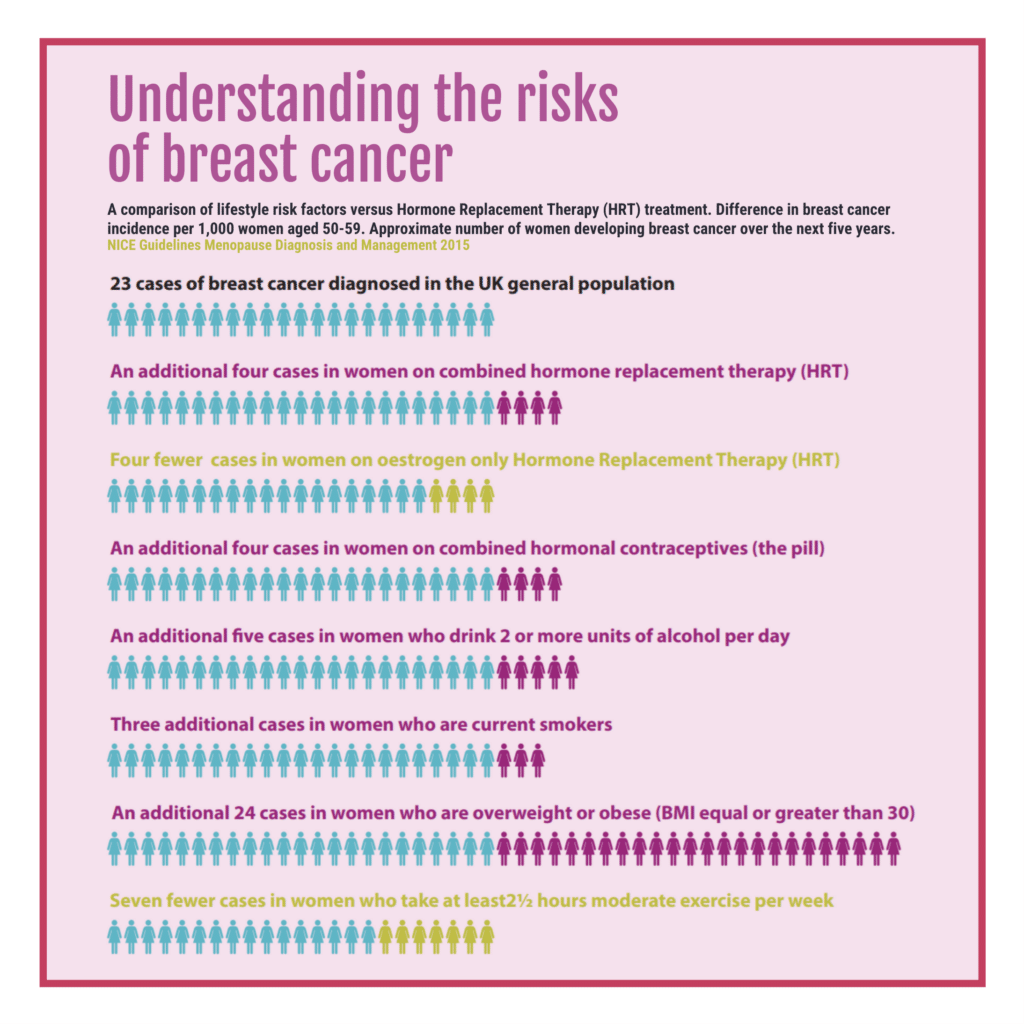
- Obesity is an independent risk factor for breast cancer, particularly in postmenopausal women aged 50–59
- Adipose (fat) tissue produces oestrogen — after menopause, it becomes the primary source of oestrogen in the body
- Higher oestrogen levels from excess adipose tissue stimulate breast cell growth, increasing cancer risk
- NICE guidelines recognise obesity as a significant breast cancer risk factor requiring active management
- Weight management is a clinically meaningful strategy for breast cancer risk reduction
The 2015 NICE guidelines for menopause diagnosis and management specifically address the relationship between obesity and breast cancer risk in women aged 50–59, outlining three key clinical points.
What the NICE Guidelines Say About Obesity and Breast Cancer
The 2015 NICE guidelines for menopause diagnosis and management focus on women aged 50–59 and examine their risk of developing breast cancer. The guidelines highlight three key points regarding the relationship between obesity and breast cancer risk:
In the general population, the risk of breast cancer increases with certain factors. The guidelines specifically emphasise the risk posed by obesity as distinct from, and in addition to, other established risk factors.
Women living with obesity (BMI 30 or higher) have a higher baseline risk of developing breast cancer compared to women with a lower BMI. This increased risk is attributed to higher levels of endogenous oestrogen produced by adipose (fat) tissue.
The guidelines underline the importance of recognising obesity as a significant and independent risk factor for breast cancer, and advocate for weight management and healthy lifestyle changes as part of overall breast cancer risk reduction strategies.
Why Does Obesity Increase Breast Cancer Risk?
The biological mechanism linking obesity to breast cancer is primarily hormonal — and it is particularly relevant after menopause.
Fat cells (adipocytes) contain an enzyme called aromatase, which converts androgens into oestrogen. This process occurs throughout the body but is most significant in adipose tissue — meaning the more adipose tissue a person has, the more oestrogen is produced.
Before menopause, the ovaries are the dominant source of oestrogen. After menopause, ovarian oestrogen production falls dramatically — and adipose tissue becomes the main source. Women with obesity therefore have significantly higher circulating oestrogen levels than postmenopausal women with lower body weight.
Oestrogen drives the proliferation of breast epithelial cells. Prolonged exposure to elevated oestrogen levels increases the number of cell divisions in breast tissue — and with each division comes an opportunity for DNA errors that can initiate cancer.
Obesity also drives chronic low-grade inflammation and insulin resistance, both of which independently promote tumour development and growth. These mechanisms compound the hormonal risk, making obesity a multifaceted cancer risk factor.
What This Means for Weight Management
Understanding the hormonal mechanism makes clear why weight management is not simply about appearance or metabolic health — for postmenopausal women, it is a meaningful strategy for reducing breast cancer risk.
The NICE guidelines explicitly recognise this, advocating for weight management as part of a broader breast cancer risk reduction strategy. This does not mean that losing weight eliminates risk, but the evidence consistently supports that maintaining a healthy weight reduces it.
For women in the 50–59 age group navigating menopause and considering hormone therapy, understanding the interplay between body weight, oestrogen, and breast cancer risk is particularly important. Our doctors at MedSurg Weight Loss can discuss these factors as part of a holistic approach to your health. Learn more about our menopause and perimenopause services.
If you have concerns about your weight and breast cancer risk, or would like to explore weight management options, get in touch or explore our Medical Weight Loss service.
Medical disclaimer: This article is for general informational purposes only and does not constitute medical advice. Breast cancer risk is influenced by many factors beyond body weight. Please speak with your doctor for a personalised assessment of your individual risk, particularly if you have a family history of breast cancer or other risk factors.